4.7
607 Reviews
Flooring Arizona since 1945!
4.7/5


Professional Installation

Educated Consultants

4.7
607 Reviews
4.7/5

Choosing between ceramic and porcelain tile can be tricky when both look so similar. While each comes in a wide range of colors, patterns, and finishes, there are important differences in how they perform.
So, what's the difference between ceramic and porcelain tile? Both are made from clay, but porcelain is denser and absorbs less water, making it ideal for high-traffic areas, bathrooms, and certain outdoor spaces. Ceramic is generally more affordable and easier to install, making it a great choice for indoor floors, walls, and backsplashes.
Let's compare the two materials in more detail so you can choose the right tile for your Arizona home.
Both ceramic and porcelain are made from clay and fired in a kiln. In fact, porcelain is technically a type of ceramic tile. The main differences come down to the materials used and how they're manufactured.
Ceramic tiles are made from natural clay and minerals that are shaped, dried, and fired in a kiln. Most are finished with a protective glaze that adds color, pattern, and texture.
Because ceramic is generally less dense than porcelain, it's easier to cut and install, making it a popular choice for backsplashes, decorative walls, and residential floors.
Porcelain uses a more refined clay mixture and is fired at high temperatures to create a denser, less porous tile. This makes it highly resistant to moisture and wear.
Available in glazed and unglazed finishes, porcelain can replicate the appearance of natural stone, wood, and concrete. Some varieties have a consistent body color, while others feature a decorative surface layer, which can affect how visible chips are.
Water absorption is one of the biggest differences between ceramic and porcelain tile. To qualify as porcelain, a tile must have a water absorption rate of 0.5% or less, making it particularly suitable for moisture-prone areas.
Ceramic tile is more porous, but many glazed options still perform well in bathrooms and kitchens when properly installed.
Keep in mind that water-resistant tile doesn't make a floor or shower waterproof. Proper waterproofing membranes, grout, and installation techniques are essential, especially in showers and other wet areas.
Both materials can last for decades when properly selected, installed, and maintained. However, porcelain generally has an advantage in demanding environments because of its dense structure and low water absorption.
Porcelain is often recommended for busy households, especially in areas such as hallways, kitchens, and entryways.
Ceramic tile can also withstand everyday household activity, but the durability of the surface depends on the product's glaze, finish, and intended use.
For glazed tiles, you may encounter a PEI rating, which describes resistance to visible surface wear under standardized testing. Ratings commonly range from 0 to 5, although not every product uses this classification.
As a general guide:
Always check the manufacturer's recommendations rather than relying on a PEI number alone. Unglazed products and some modern tile collections use different performance classifications.
Porcelain's density can contribute to strong performance under demanding conditions, but it isn't indestructible. Both ceramic and porcelain can chip if struck by a heavy object or crack if the substrate beneath them moves excessively.
Installation quality is especially important here. An uneven subfloor, inadequate mortar coverage, or missing movement joints can lead to problems regardless of which material you choose.
For homeowners, selecting a properly rated tile and investing in professional installation is often more important than choosing the hardest material available.
The best choice depends on where the tile will be installed, how the space is used, and the conditions it will face.
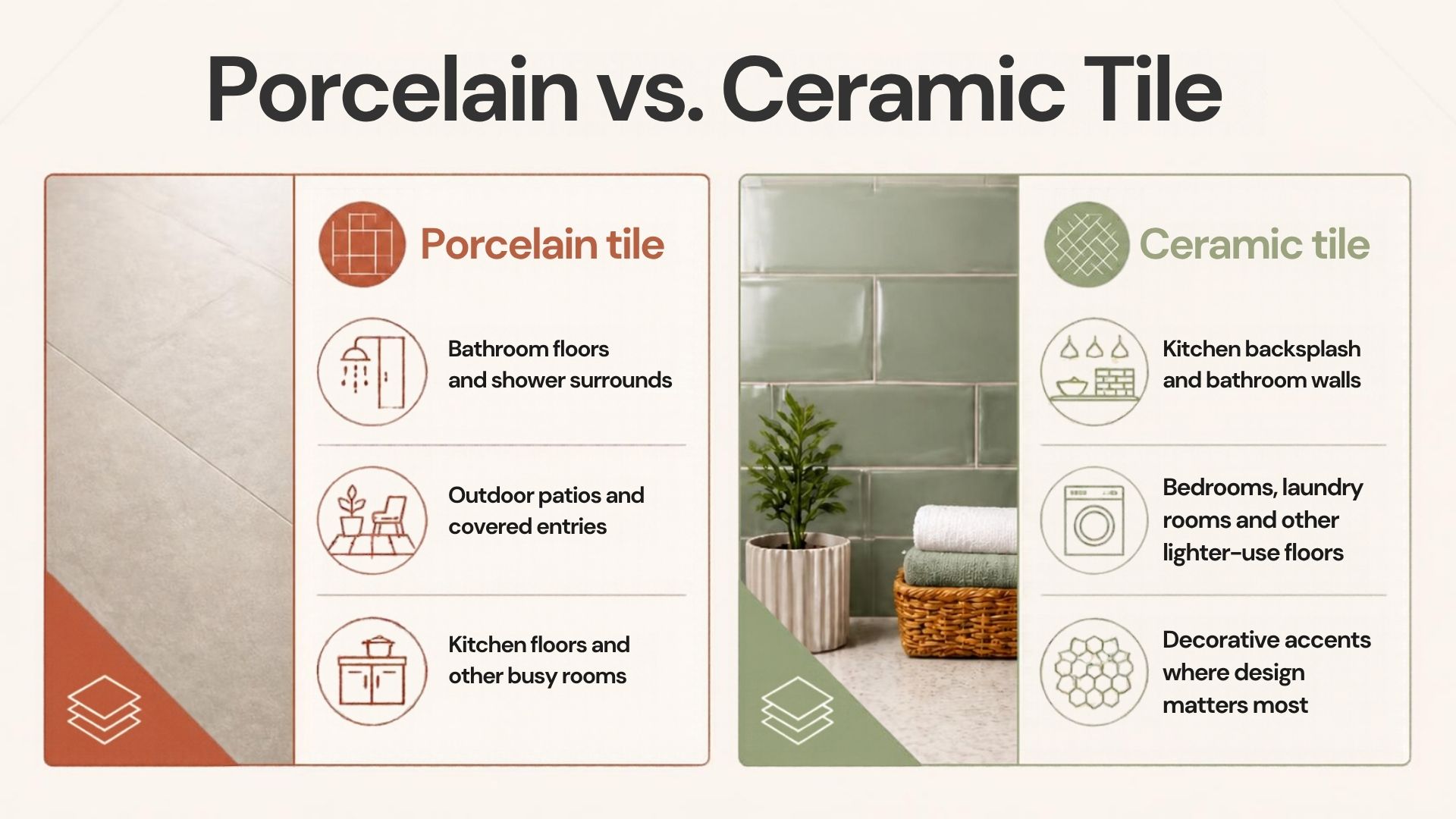
Arizona homeowners often ask about outdoor use. For patios, a porcelain tile rated for exterior use is generally the better pick because of its low water absorption and strength. Check the rating on the specific tile before you buy.
Ceramic tile is generally the more budget-friendly option, but the final cost depends on more than the material itself. Porcelain tends to cost more because of its density and more demanding installation requirements, although premium ceramic tiles can sometimes be more expensive than basic porcelain options.
Factors that influence your project budget include:
Both materials are relatively low-maintenance, which is one of the biggest reasons homeowners choose tile flooring.
For everyday cleaning:

If you're still deciding, start by thinking about how the room will actually be used.
Choose ceramic tile if:
Choose porcelain tile if:
Whichever you choose, product specifications matter. A well-made ceramic tile selected for the right application can outperform a porcelain tile used somewhere it wasn't designed to go.
Baker Bros has helped Arizona homeowners find the right flooring since 1945. Whether you're comparing ceramic and porcelain tile or planning a complete renovation, our experienced consultants can help you choose the best option for your space and budget.
Floor tile projects at Baker Bros typically range from $11-$15 per square foot, covering removal and disposal of existing flooring, furniture moving, new materials, and professional installation. Pricing may vary based on product selection and project-specific requirements.
Explore our tile flooring selection, try our flooring visualizer, or visit a Baker Bros showroom to compare styles and finishes in person.
Neither is better in every situation. Porcelain is harder and far less porous, so it suits wet and high-traffic spaces. Ceramic costs less and is easier to install, which makes it a smart choice for walls, backsplashes and lighter-use rooms.
The most reliable method is to check the manufacturer's specifications. Porcelain has a water absorption rate of 0.5% or less. Appearance alone isn't a dependable indicator because both materials can have similar glazes, colors, and finishes.
Both are easy to clean. Porcelain's low porosity gives it a slight edge against stains, but in either case the grout needs the most care.
Ceramic and porcelain are both excellent flooring materials, and the right choice comes down to where you're installing them and what you need them to handle.
Porcelain is often worth considering for busy floors, moisture-prone areas, and exterior applications. Ceramic offers plenty of durability and design flexibility for many indoor projects, often at a more accessible price.
If you'd like help narrowing down your options, visit your nearest Baker Bros showroom to compare tile styles and speak with a flooring consultant who understands Arizona homes.
Reviewed By: Phil Koufidakis, President at Baker Bros Area Rugs and Flooring
Phil Koufidakis has spent more than 25 years helping Arizona homeowners find the right flooring for their homes. As President of Baker Bros Area Rugs and Flooring, he brings decades of hands-on experience and industry knowledge.
Stay informed, get inspired, and be the first to know about promotions – subscribe now!
By subscribing, you agree to our Privacy Policy.